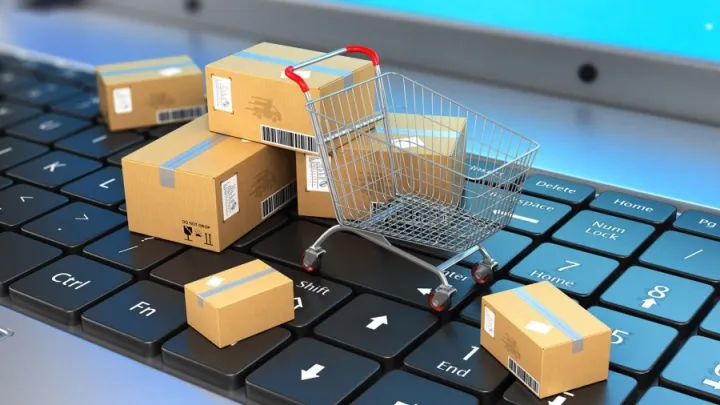
What Is E-commerce?
E-commerce is far more than just “selling online.” It’s a new way of doing business—one that enables companies to connect with customers, understand their needs, and deliver value at the right time and place—even if that means a customer orders a product from their bed at midnight using their smartphone.
Today, e-commerce extends well beyond digital storefronts. It encompasses B2C (business-to-consumer), B2B (business-to-business), and even D2C (direct-to-consumer) models. The real differentiator isn’t technology—it’s your ability to build an ongoing relationship with your customer, not just close a one-time transaction.
Why Should You Care About E-commerce in 2026?
In 2024, global retail e-commerce sales reached trillions of U.S. dollars—and are projected to approach 7 trillion U.S. dollars by 2028. But more important than the number is the behavioral shift: consumers no longer compare products alone—they compare experiences.
E-commerce is no longer optional—it’s a core component of any serious business strategy. It gives you:
- Global reach without visas or warehouses in every country—your store is open 24/7 to anyone with an internet connection.
- Real-time insights into customer behavior—no guesswork, only data-driven decisions based on actual actions.
- Significantly lower operating costs compared to physical stores, especially during early growth stages.
- The agility to test ideas quickly—launch a new product, measure feedback within days, and pivot without losing millions.
How Has the Shopping Experience Evolved? From “Going to the Store” to “The Store Comes to You”
Customers no longer wait for Black Friday to buy. They expect seamless journeys: they search, compare, read reviews, place an order, and receive delivery—all in the same day, sometimes within hours. That’s why having a website alone isn’t enough. You must be present at every touchpoint: from ads and chatbots to mobile apps and SMS messages.
Successful brands today integrate channels intelligently: a customer might see a product on Instagram, visit your site, save it to their cart, and complete the purchase later via an email link. Every step must be connected, frictionless, and personalized.
Unforgettable Success Stories—and What We Can Learn From Them
E-commerce success isn’t about size—it’s about how smartly you understand your market.
Digital-native brands that rose to dominance:
- Warby Parker: Didn’t invent new eyewear—but reinvented the buying experience by letting customers try frames at home before paying.
- Casper: Turned mattress shopping—a category once deemed “un-sellable online”—into a simple, delightful digital experience.
- The Blonde Salad: Used content and social influence as the gateway to commerce, not just a promotional afterthought.
Traditional retailers that transformed brilliantly:
- John Lewis: Didn’t just launch a website—they empowered in-store staff to assist customers with online purchases right inside physical locations.
- Louis Vuitton: Blended digital luxury with physical presence, offering an online buying journey as refined as stepping into a boutique.
What Makes an E-commerce Platform Truly Successful?
It’s not just about beautiful design or fast loading times. In 2026, a successful platform must be:
| Feature | Why It Really Matters |
|---|---|
| Integratable | You don’t start from scratch—you need seamless connections to accounting software, CRM systems, shipping providers, and even AI tools. |
| Secure & Reliable | Trust is the real currency. A single data breach can permanently damage your brand. |
| Customizable | No one wants a store that looks like a clone. Your visual identity and brand voice must shine through clearly. |
| Scalable | If your promotion goes viral and thousands of orders hit in an hour, your platform must hold strong—not crash. |
| User-friendly for both customers and your team | A simple front-end for shoppers and an intelligent dashboard for your staff—because efficiency starts from within. |
What Lies Ahead in 2026 and Beyond?
E-commerce is no longer “the future”—it’s a rapidly evolving reality. Key trends shaping the landscape today include:
- AI is no longer a luxury—from smart product recommendations to automated customer support and AI-generated product descriptions.
- Augmented Reality (AR) is becoming essential—especially in fashion, home decor, and beauty, where customers want to “see” products before buying.
- Sustainability as a differentiator—consumers ask: “Who made this? How? And what’s its environmental impact?”
- Mobile and digital wallet payments—cash is fading; faster checkout = higher conversion rates.
- Social Commerce—buying directly from Instagram, TikTok, or even Snapchat.
A Message to Businesses in the Arab World: Opportunities Are Greater Than You Imagine
The Arab region is witnessing unprecedented growth in internet and smartphone adoption. Logistics infrastructure is improving, and digital payment habits are spreading. Yet the real challenge isn’t technical—it’s understanding the Arab consumer: their preferences, concerns, and how they engage with brands.
The winners will be those who blend cutting-edge technology with deep local insight—not simply copy Western models. Because Arab customers don’t just want an “online store”; they want an experience crafted specifically for them.
Sources
- eMarketer (2025). Retail e-commerce sales worldwide from 2022 to 2028. Statista. Source Link
- Middle East E-commerce Industry Reports – 2025
- Studies on Arab Digital Consumer Behavior – Local and International Research Centers