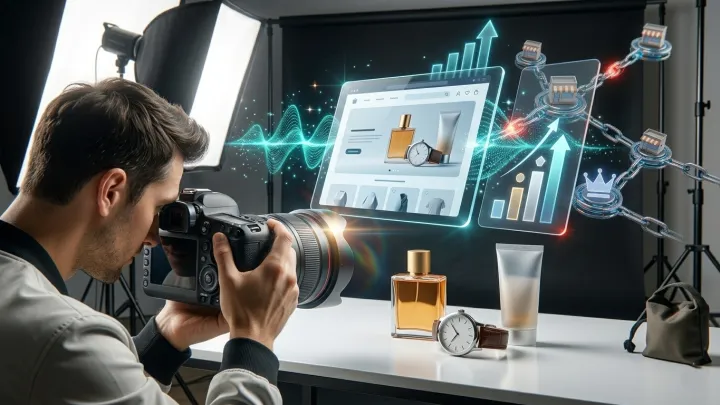
Two years ago, I lost a store that was just about to take off. Why? Because I thought “a beautiful image is enough.” I used professional studio shots—perfect lighting, clean backgrounds… everything looked like it belonged in a fashion magazine. The result? Plenty of visitors, but almost zero conversions.
Why? The images showed the product—but they didn’t answer the real question in the customer’s mind: “Is this right for me?”
Today, after testing hundreds of combinations and analyzing data from thousands of product pages, I’m convinced that images and videos aren’t just decoration for your store—they’re your most powerful marketing assets and your biggest SEO leverage when used correctly.
Secret #1: A convincing image beats a thousand keywords
In e-commerce, customers can’t touch your product. So your images must compensate for that sensory gap. Don’t settle for a single front-facing shot. Provide what experts call “human context.”
Simple example: If you’re selling a backpack, don’t just show it on a white background. Add a photo of someone carrying it while commuting in the city, an interior shot showing pockets and organization, and a comparison image next to a water bottle to illustrate scale. These images don’t just answer questions—they build trust.
In a real test with a home furniture store, we replaced studio photos with authentic lifestyle shots: actual rooms in real customers’ homes, natural lighting, everyday details. Result? Bounce rate dropped by 35%, and time on product pages increased significantly.
(By the way, if you invest in professional photos but skip writing proper alt text, you’re throwing your efforts away. Google doesn’t “see” images—it reads the descriptions beneath them.)
Alt Text: Not a technical detail—your secret keyword opportunity
Many store owners write alt text like: “product_image_01.jpg.” Fatal mistake.
Alt text is a golden SEO opportunity—but only if done right: it must be descriptive, natural, and aligned with search intent. Don’t write: “best cheap running shoes.” Instead, write: “Trail running shoes for rugged terrain – 2026 model by [Your Brand].”
Why? Google uses this text to understand your image—especially in image search. If someone searches for “2026 trail running shoes” and your image appears, you’re capturing traffic most competitors ignore.
Video isn’t a luxury—it’s a digital trust booster
I once heard a customer say: “I won’t believe it works until I see it in action.” That sentence changed my approach completely.
A short video (even 30 seconds) showing real-world use can increase conversion rates by up to 80%. Why? It removes uncertainty. Customers instantly see size, quality, and functionality.
For a kitchenware e-commerce store, we added short clips showing how a specific knife slices vegetables or how a blender operates without shaking. Sales jumped. Reviews shifted from “Does this actually work?” to “I want the exact knife from the video!”
And crucially: Google loves visual content. Pages with embedded videos rank faster—especially when hosted on YouTube with proper Schema markup.
Don’t forget the video filename itself—it matters!
Yes, your video filename counts. Never upload as “VID_20240915.mp4.” Rename it to something like: “premium-blender-review-2026.mp4.”
Same goes for images. Instead of “IMG_1234.jpg,” use “waterproof-travel-backpack.jpg.” These small details help search engines understand your content more accurately during advanced crawling.
Image compression: balancing beauty and performance
I’ve seen stores use 5000px images… then wonder why their site is slow. Listen: visual appeal doesn’t compensate for poor user experience.
Use tools like TinyPNG or ShortPixel to compress images without visible quality loss. Aim for under 200KB per image when possible. If you’re on WordPress, plugins can auto-compress uploads.
Remember: load speed is part of Core Web Vitals—a direct ranking factor. A stunning image that cripples your site speed = lost sales.
Interactive and 360° images: letting customers “touch” through the screen
For premium or technical products—like watches, cameras, or jewelry—static images fall short. That’s where interactive or 360° views shine.
One luxury watch client added 360° views for every timepiece. Result? Time on page increased by 60%, and sales of high-end models (usually hesitant online purchases) rose sharply.
Why? Because shoppers felt like they were holding the watch in their hands—a sensation no static image can replicate, no matter how high-res.
Final takeaway: Images and videos are your store’s face
In 2026, it’s not enough to claim “our product is high quality.” You must show it. Make customers feel confident before they click “Buy Now.”
Choose images as if you’re explaining the product to your best friend. Add video as if you’re letting them hold it. Write alt text as if you’re answering their question out loud.
Because ultimately, SEO isn’t just about algorithms—it’s about people. And people trust what they see.